
Last updated: November 4, 2026
Quick answer: A genuinely functional small entryway table solves three problems at once: it provides a landing surface, contributes storage, and keeps the walkway clear. Depth is the critical measurement most people overlook.
Key takeaways
- Each table style solves the small-space problem differently, and understanding the distinctions helps you choose without second-guessing.
- The correct proportions depend on three measurements: hallway width, ceiling height, and door clearance.
- An entryway storage table earns its square footage by doing more than holding a vase.
- Material choice is where a small entryway table crosses from functional to genuinely luxurious.
- Styling a decorative hallway table is about restraint and intentional layering — two things that are harder than they sound.
Your front door sets the tone for every room that follows. Small entryway tables are the single most impactful piece of entryway furniture you can add to a compact foyer — they create instant visual purpose without stealing precious floor space. The best options combine a slim profile with smart storage and a finish that signals luxury from the moment guests step inside. Whether your hallway is barely four feet wide or your apartment entrance doubles as a mudroom, the right table transforms a transitional space into something intentional and beautiful.

What Makes a Small Entryway Table Truly Functional in a Narrow Hallway?
A genuinely functional small entryway table solves three problems at once: it provides a landing surface, contributes storage, and keeps the walkway clear. Depth is the critical measurement most people overlook.
Functionality also depends on how the table interacts with the door swing. I always ask my clients to measure the arc of their front door before selecting any hallway accent table. In a recent Brooklyn townhouse project, my client had chosen a beautiful antique demilune that turned out to block the door by two inches — a small measurement that caused daily frustration.
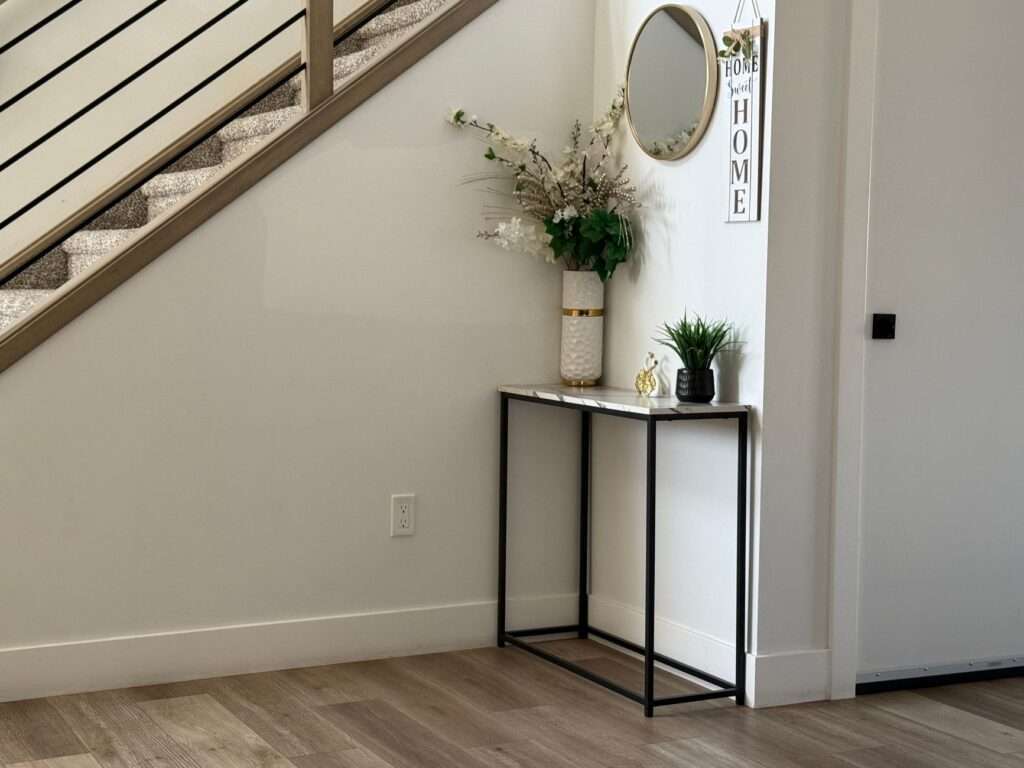
Beyond depth, consider the table’s leg structure. Open legs keep the space feeling airy. Solid-base designs read as bulkier, even at the same overall dimensions. A slim hallway table with tapered legs in brass or matte black reads as lightweight and refined simultaneously.
- Choose a depth of 10–14 inches for hallways under five feet wide.
- Open leg structures preserve visual breathing room.
- Measure door swing before finalizing placement.
Top Style Categories: Console, Demilune, Floating, and Slim Accent Tables
Each table style solves the small-space problem differently, and understanding the distinctions helps you choose without second-guessing. A narrow console table is the most versatile: rectangular, typically 12 to 16 inches deep, and available in every material from solid walnut to powder-coated steel.
The demilune table — a half-moon silhouette — is a designer favorite for tiny foyers because its curved front face softens architectural corners and its flat back sits flush against the wall. As Elle Decor (2026) points out, the demilune’s curved profile also creates less of a visual obstacle than a squared edge, making hallways feel wider than they are.
A floating entryway shelf, or wall-mounted entryway table, is the most space-efficient choice of all. It eliminates legs entirely, freeing the floor for shoes, baskets, or simply open space. A floating wall-mounted entryway shelf in oak or walnut fits easily into apartments where even a slim table feels like too much.
The compact accent table — often square or round — works in entry alcoves rather than straight hallways. It’s best suited to foyers with a defined niche, where a rectangular table might feel awkward. For decor pairing ideas, our guide on what is an accent table explores how these pieces function across the home.

How to Choose the Right Size and Proportions for Your Entryway
The correct proportions depend on three measurements: hallway width, ceiling height, and door clearance. Most interior designers follow a simple rule — a small foyer table should be no taller than 32 inches and no deeper than 14 inches for tight corridors.
Table height should align roughly with the hip, landing between 28 and 34 inches. This creates a natural surface for setting down keys and mail without requiring an awkward reach. Taller ceilings can accommodate a slightly taller table — up to 36 inches — without the piece looking disproportionate.
Width matters for balance. A table that spans less than half the wall it sits against can look lost. One that spans more than two-thirds can feel crowded. For a standard 48-inch-wide hallway wall, a table between 24 and 32 inches wide strikes the right visual balance.
A slim 24-inch console table is a reliable starting point for most compact American foyers. From there, adjust upward based on available wall width and how much surface area you actually need.
Storage Features Worth Prioritizing in a Small Entryway Table
An entryway storage table earns its square footage by doing more than holding a vase. The storage features you prioritize should reflect your actual daily habits, not an idealized vision of a clutter-free foyer.
Drawers are the most discreet option. An entryway table with drawers hides keys, lip balm, dog leashes, and mail in a way that open shelves simply cannot. Even a single shallow drawer makes a meaningful difference in daily tidiness.
Open lower shelves offer visual accessibility. They work best for decorative baskets, a small tray, or shoes in a pinch. Layering a woven basket on the lower shelf of a foyer table is one of the easiest space-saving entryway solutions that also reads as intentionally designed.
- One drawer conceals everyday clutter efficiently.
- Open lower shelves suit decorative baskets and seasonal items.
- Hooks mounted to the wall above can extend the table’s storage reach.
Hooks are a smart addition. Wall-mounted hooks positioned just above the table create a complete small foyer station without requiring a larger piece of entryway furniture. This combination — table plus hooks — functions like a compact mudroom in spaces that have neither the square footage nor the budget for built-ins.

Which Materials and Finishes Elevate a Compact Entryway to Luxury?
Material choice is where a small entryway table crosses from functional to genuinely luxurious. The most elevated options in 2027 combine natural materials with refined hardware — think solid oak with unlacquered brass pulls, or veined marble with blackened steel legs.
A travertine-top slim hallway table communicates luxury immediately, even at modest dimensions.
Mirror and glass surfaces reflect light and visually expand a narrow corridor. A mirrored-front accent table doubles the sense of depth in a foyer — particularly effective when positioned across from a window or pendant fixture. Glass-top tables achieve a similar lightness without the reflective intensity.
Lacquered finishes in deep navy, forest green, or warm cream are having a significant moment in 2027 foyer design ideas. A lacquered small foyer table in a jewel tone against a white wall creates a focal point that punches well above the piece’s physical scale.
For wall color pairing inspiration, our article on why you should paint your walls in more than one hue offers guidance on creating depth in compact spaces through strategic color use.
How to Style Your Small Entryway Table Like an Interior Designer
Styling a decorative hallway table is about restraint and intentional layering — two things that are harder than they sound. The goal is a surface that reads as curated, not cluttered, and functional without looking like a drop zone.
Start with a mirror above the table. It serves a practical function and amplifies the vertical dimension of a tight hallway. For mirror options specifically chosen to brighten a room, see our roundup of top 9 decorative mirrors for brightening your living room.
Layer from back to front. Place the tallest item — a lamp or tall vase — at the back. A medium-height decorative object sits in the middle. A small tray or single bloom comes forward. This three-depth arrangement creates visual interest without overwhelming a compact surface.
In a recent Manhattan studio project, I styled a 28-inch-wide modern console table using just three objects: a ceramic table lamp, a small stack of two hardcover books, and a single sprig of dried pampas grass in a bud vase. The client told me the entryway finally felt like it belonged to the rest of the apartment.
A small decorative tray for an entryway table corrals keys and sunglasses so the surface stays styled even on busy mornings. It’s a minor addition that makes a disproportionate difference in daily tidiness.

Budget vs. Investment Pieces: What Should You Spend in 2027?
Deciding what to spend on a small entryway table depends on how long you plan to stay in the space and how much use the piece will take. Entry furniture sees significant daily wear — it catches bags, keys, and the occasional elbow.
Budget pieces — generally under $200 — are ideal for renters or anyone in a transitional living situation. Many solid options from mid-market retailers offer clean lines and adequate construction. A slim affordable console table under $200 can look polished when styled well — it’s the objects on the table, not the table itself, that often carry the room.
Mid-range pieces ($200–$800) offer real material upgrades: solid wood joinery, dovetail drawers, and metal hardware that won’t tarnish after a season. This tier suits most homeowners who want quality without a custom price tag.
Investment pieces — $800 and above — include bespoke work from furniture makers, vintage French demilunes, or designer collaborations. Entry-level luxury hallway furniture is one category where a single statement investment piece pays dividends in perceived home value and daily satisfaction. The Metropolitan Museum of Art’s decorative arts collection, accessible via The Metropolitan Museum of Art, documents how console and demilune tables have historically served as prestige markers in domestic interiors — a legacy that carries through to 2027 interior design.
| Item | Material / Style | Best For | Price Tier |
|---|---|---|---|
| Threshold Wynwood Console Table | Wood veneer, slim rectangular | Budget-conscious renters | Under $150 |
| Safavieh Couture Demilune Table | Lacquered wood, half-moon | Curved foyer alcoves | $250–$450 |
| Floating Wall Mounted Entry Table Oak | Solid oak, wall-mounted | Tiny apartments, minimalist style | $150–$300 |
| Marble Top Console Table with Brass Legs | Marble and brass, slim | Luxury entryway statement | $600–$1,200 |
| Nathan James Harlow Narrow Console Table | Steel frame, wood shelf | Modern industrial foyers | $180–$280 |

Frequently Asked Questions
What is the best small entryway table for a narrow hallway?
The best option for a narrow hallway is a slim console table or wall-mounted entryway table with a depth of 10 to 14 inches. These profiles allow comfortable walkway clearance while still providing a useful surface. A demilune table is another strong choice — its curved front edge creates a softer visual obstacle and tends to feel less imposing in tight corridors. Choose open legs to keep the space feeling airy.
How deep should a small entryway table be to not block a walkway?
Most interior designers recommend a maximum depth of 12 to 14 inches for hallways under five feet wide. The American Society of Interior Designers advises maintaining at least 36 inches of clear walking space beside any entryway furniture. For very tight corridors — under four feet — a floating wall-mounted shelf with no depth below countertop level is the safest choice to preserve free movement.
What is the ideal height for a small entryway table?
The ideal height for an entryway table is between 28 and 34 inches, roughly hip height for most adults. This range makes it easy to set down items naturally without bending or reaching awkwardly. In rooms with higher ceilings — nine feet or more — you can push toward 36 inches without the table looking undersized. Always consider the height of any mirror or art you plan to hang above it.
Can a floating wall-mounted table work as an entryway table in a tiny space?
Absolutely. A floating entryway shelf is arguably the most space-efficient solution available for very small foyers. It provides a surface for keys, mail, and decor without occupying any floor space at all. This makes it ideal for apartments and narrow hallways where even a 10-inch-deep table feels like too much. Make sure wall anchors are secured into studs for a bracket-mounted piece that will bear daily use.
What should I put on a small entryway table to keep it looking stylish?
Keep it to three items at most: one tall element like a lamp or vase at the back, one medium decorative object in the middle, and one small practical item — a tray or candle — at the front. A small tray corrals everyday clutter like keys and sunglasses. A single plant or fresh flower adds life. Avoid piling mail or bags directly on the surface, which erases the styled look almost instantly.
How do I choose a small entryway table that also provides storage?
Look for a table with at least one shallow drawer or an open lower shelf. A drawer conceals everyday items — keys, dog leashes, hand sanitizer — without disrupting the surface styling. An open shelf fits a woven basket that can hold shoes or scarves. Combining both features in a single entryway storage table gives you the most flexibility. Avoid tables with doors rather than drawers, as they require extra swing clearance in tight spaces.
Which small entryway table styles look the most luxurious in 2027?
In 2027, the most luxurious-looking choices are travertine-top console tables with blackened steel legs, lacquered demilune tables in deep jewel tones, and solid walnut narrow consoles with unlacquered brass hardware. Fluted wood panel detailing — a major decorative trend this year — also reads as high-end at almost any price point. A mirrored-face accent table adds glamour to a small foyer without requiring additional decor.
What is the difference between a console table and an entryway table for small spaces?
Technically, all entryway tables are console tables, but not all console tables are sized for small entryways. A standard console table can be up to 60 inches wide and 18 inches deep — far too large for a compact foyer. A small entryway table is simply a console scaled down: typically 24 to 36 inches wide and 10 to 14 inches deep. The term entryway table signals the intended placement and functional use rather than a distinct furniture category.
Related reading: How to Choose the Perfect Nightstand for Small Spaces
Related reading: Interior Design Ideas for Small Condo Spaces That Actually Work
Sources
- Architectural Digest (2026) — Entryway furniture trends and material stories
- American Society of Interior Designers (2026) — Clearance and circulation guidelines for residential hallways
- Elle Decor (2026) — Demilune table design and lacquered finish trends
- House Beautiful (2026) — Table height standards and mirror styling in small entryways
- Veranda (2026) — Entryway basket styling and investment furniture guidance
- The Metropolitan Museum of Art — Decorative arts collection: historical context of console and demilune tables in domestic interiors


