Last updated: November 4, 2026
Quick answer: A bed end bench is the most precise and widely used name for this piece of bedroom furniture. The term captures both its location and its function in a single phrase.
Key takeaways
- The bedroom bench earned its place in luxury interiors because it solved a real problem while looking beautiful doing it.
- The best style of bed end bench depends on your existing bedroom aesthetic, and in 2027 there are more options than ever before.
- Material choice defines how a bedroom bench feels, wears, and fits into your overall decor scheme.
- Sizing a bed end bench correctly is one of the most practical decisions in bedroom interior design, and getting it wrong visually unbalances the whole room.
- A bedroom bench does not need storage to be valuable, but adding it makes the piece significantly more functional—especially in rooms where closet space is limited.
That stylish piece of furniture sitting at the foot of your bed has a name—and knowing it opens up a whole world of design possibilities. What is the bench at the end of a bed called? It is most commonly called a bed end bench, though the terms foot of bed bench and bedroom bench are equally accepted. Interior designers also use terms like end of bed bench, bed foot bench, or simply a bedroom accent bench, depending on the style and function of the piece.

The Proper Name: What Is a Bed End Bench Called?
A bed end bench is the most precise and widely used name for this piece of bedroom furniture. The term captures both its location and its function in a single phrase.
You will also hear it called a foot of bed bench, a bedroom bench, or a bed foot bench. In more formal or traditional interiors, designers sometimes refer to it as a settee bench when it has a back panel, or a chaise bench when it offers a longer, more reclined profile. A fully cushioned version without a back is often marketed as an upholstered bench.
The bed end bench has roots in 18th-century European furniture traditions, when households used a similar piece called a chest bench to store linens at the foot of the bed. Over centuries, the storage element gave way to pure seating, and eventually to decorative accent furniture that anchors a bedroom’s design.
In contemporary bedroom interior design 2027, the bed end bench functions as both a practical seat and a visual full stop—a piece that signals where the sleeping zone ends and the rest of the room begins. Whether tufted, slatted, or storage-equipped, the name stays the same: a bed end bench.
How Did the Bedroom Bench Become a Luxury Staple?
The bedroom bench earned its place in luxury interiors because it solved a real problem while looking beautiful doing it.
Historically, wealthy households used chests and trunks at the foot of the bed to store valuables and extra linens. Decorative seating at the bedside became a status symbol in French court interiors during the Louis XV period. Upholstered benches covered in silk and velvet signaled wealth and refinement.
By the 20th century, Hollywood glamour pushed the bedroom bench into popular culture. Film sets featured tufted velvet benches at the foot of oversized beds, and consumers wanted the same look at home.
In my own design practice, I worked on a Scottsdale master bedroom in early 2027 where the client had no bench and felt the room looked unfinished despite a beautiful bed frame and custom bedding. Adding a single velvet tufted bedroom bench in deep emerald transformed the entire room. The space suddenly had visual weight at the foot of the bed and a clear sense of intention.
Today, bedroom seating is no longer reserved for grand estates. Even compact bedrooms in urban apartments benefit from a well-chosen bench that adds function and personality.

What Styles of Bed End Benches Work Best for Your Bedroom?
The best style of bed end bench depends on your existing bedroom aesthetic, and in 2027 there are more options than ever before.
These are the dominant bedroom bench styles defining interiors this year:
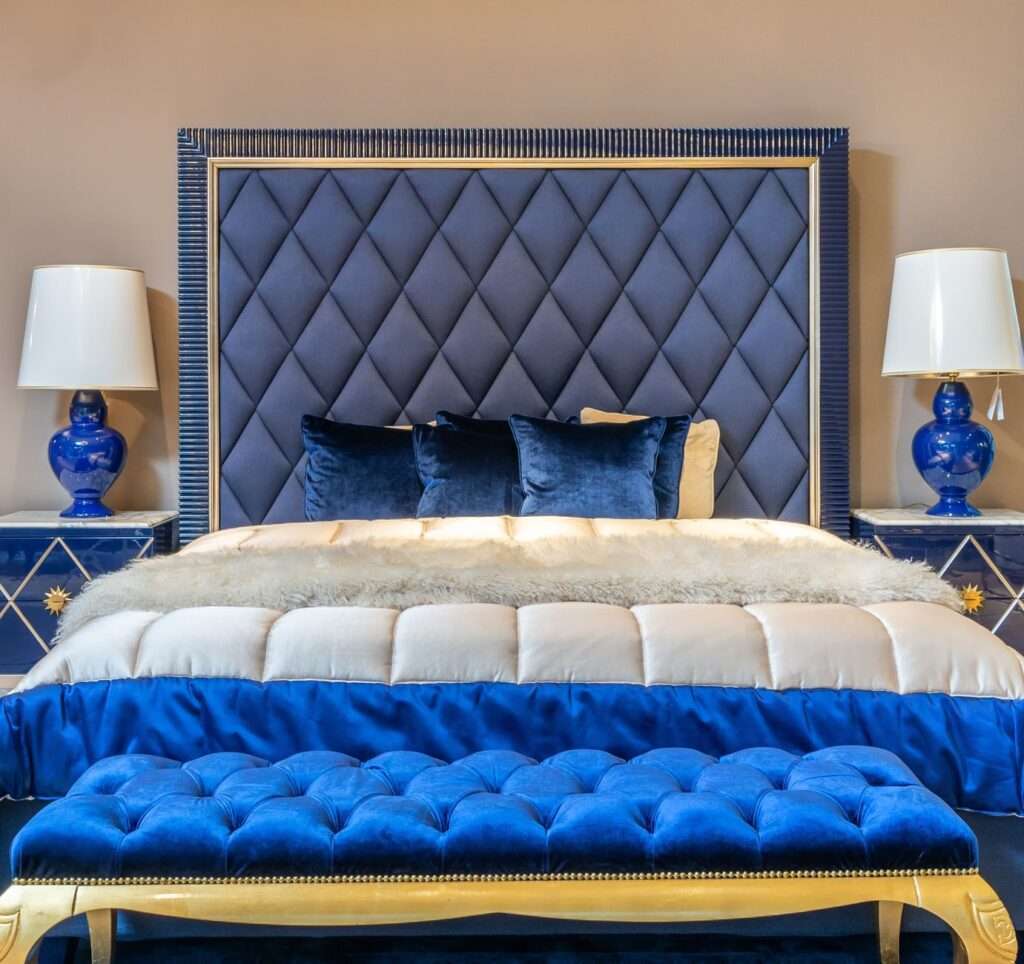
- Tufted upholstered bench: A classic choice with button detailing, works especially well in traditional or Hollywood Regency bedrooms.
- Minimalist slatted wood bench: Clean lines suit Scandinavian, Japandi, and modern-organic interiors perfectly.
- Storage bench bedroom style: A hinged-lid bench that hides extra pillows or blankets—ideal for smaller rooms needing dual-purpose furniture.
Beyond those three, the ottoman bench is having a major moment in 2027. It splits the difference between a traditional bench and an oversized footrest, offering a padded top surface without a rigid back. The chaise bench adds an elongated silhouette that pairs well with California King or oversized beds.
For bedrooms styled with bold pattern play, a decorative bedroom bench in a contrasting print—think geometric jacquard or abstract linen—can function as the room’s focal accent.
Pair your bench style with your rug for a cohesive look. A modern living room rug guide can help you understand how to coordinate textures and patterns across an entire room, and the same principles apply when anchoring a bedroom seating area.
Key Materials and Upholstery Options for a Bedroom Bench
Material choice defines how a bedroom bench feels, wears, and fits into your overall decor scheme.
Velvet remains the top upholstery pick for luxury bedroom decor in 2027. A velvet bedroom bench offers rich color depth and a soft tactile quality that reads as inherently luxurious. It pairs naturally with brass or gold hardware and works across maximalist, Art Deco, and modern glam interiors.
Boucle fabric is another strong contender. The textured, looped weave suits organic modern and Japandi-influenced bedrooms. It photographs beautifully and holds up well to daily use.
Leather and faux leather suit contemporary and masculine-leaning bedroom designs. A leather end of bed bench is easy to wipe clean and develops character over time.
For the bench frame itself, material choices include:
- Solid wood legs (walnut, oak, or mahogany) add warmth and craftsmanship.
- Metal legs in brushed brass or matte black give a cleaner, more contemporary profile.
- Acrylic or lucite frames create visual lightness in smaller bedrooms.
Natural and sustainable upholstery materials—including recycled velvet blends and certified organic cotton—are increasingly requested by clients investing in luxury bedroom furniture this year. Durability and provenance now matter as much as aesthetics.

How to Choose the Right Size Bed End Bench for Any Room
Sizing a bed end bench correctly is one of the most practical decisions in bedroom interior design, and getting it wrong visually unbalances the whole room.
As a general rule, the bench should be roughly two-thirds the width of your bed. For a standard Queen bed (60 inches wide), aim for a bench between 40 and 48 inches long. For a King bed (76 inches wide), a bench between 50 and 60 inches works best. A California King warrants a bench of at least 60 inches to stay proportional.
Bed bench dimensions also matter vertically. The bench seat height should sit within a few inches of your mattress top. Most finished mattress heights range from 24 to 30 inches. A bench between 18 and 22 inches tall suits most standard setups and feels natural to sit on while pulling on shoes.
Depth matters too. A bench that is 15 to 18 inches deep gives enough seat for comfort without pushing into the walking space at the foot of the bed. Leave at least 24 to 30 inches of clearance between the bench and the wall or dresser opposite.
If you are styling a guest room or a smaller secondary bedroom, a compact bedroom bench in the 36-inch range can still anchor the space without overwhelming it.
Practical vs. Decorative: Does a Bedroom Bench Need Storage?
A bedroom bench does not need storage to be valuable, but adding it makes the piece significantly more functional—especially in rooms where closet space is limited.
A bed end storage bench typically features a hinged upholstered lid that lifts to reveal an interior compartment. You can store extra throw blankets, seasonal pillows, or bedding inside. This dual function makes a storage bench bedroom option particularly smart for primary bedrooms, guest rooms, and smaller urban apartments.
On the purely decorative side, a non-storage bench allows for slimmer profiles, more interesting leg designs, and lighter visual weight. A decorative bedroom bench with tapered brass legs and a tufted velvet cushion can serve as a piece of art at the foot of the bed without any utilitarian obligation.
The choice ultimately comes down to your bedroom’s storage needs. If your closet is already ample, choose the bench that looks best. If you need extra hidden storage, a storage bench bedroom upholstered style gives you both beauty and practicality. You can also complement it with other smart storage solutions—this guide to creative storage ideas for living room spaces shares principles that translate well into the bedroom too.

How to Style a Bed End Bench Like an Interior Designer
Styling a bedroom bench well requires understanding it as part of the room’s full composition, not as an isolated piece of furniture.
Start with proportion. The bench should align with the width of the bed frame’s footboard, or extend to about two-thirds of the bed’s total width as mentioned earlier. Center it precisely—an off-center bench reads as an error rather than a design choice.
Next, layer texture. A bare bench cushion looks flat. Drape a folded throw blanket over one end at a slight angle. Add a small decorative tray on top if the bench is wide enough.
Color strategy matters significantly. The bench can either match the headboard upholstery for a collected, tonal look, or contrast with it for intentional visual interest. In a recent Nashville bedroom project I styled, the client had a cream linen headboard and we chose a deep cognac cognac leather bedroom bench at the foot. The contrast made both pieces look more expensive, not less.
Consider nearby furniture relationships. The bench should feel connected to any accent tables for the bedroom in terms of finish and material palette. Mixing a matte black bench leg with brass accent table legs creates unnecessary tension in a luxury setting.
Finally, avoid over-accessorizing the bench. Two or three elements maximum—a throw, a small cushion placed on the floor nearby, and perhaps a low book stack—keep the styling refined rather than cluttered.

Bedroom Bench Comparison Table
| Item | Material / Style | Best For | Price Tier |
|---|---|---|---|
| Velvet Tufted Bedroom Bench | Velvet upholstery, button tufting, wood legs | Traditional, Hollywood Regency, maximalist bedrooms | $$$ |
| Upholstered Storage Bench Bedroom | Linen or faux leather, hinged lid, hidden compartment | Primary bedrooms, guest rooms needing extra storage | $$–$$$ |
| Boucle Bed End Bench | Boucle fabric, tapered walnut or oak legs | Organic modern, Japandi, neutral-toned bedrooms | $$$ |
| Wood Slat Foot of Bed Bench | Solid wood, slatted seat, no upholstery | Minimalist, Scandinavian, Japandi bedrooms | $$ |
| Leather End of Bed Bench | Genuine or faux leather, metal or wood legs | Contemporary, masculine, or industrial-leaning bedrooms | $$–$$$$ |
Frequently Asked Questions
What is the bench at the end of a bed called?
It is most commonly called a bed end bench or a foot of bed bench. Other accepted names include end of bed bench, bedroom bench, and bed foot bench. In formal design terminology, versions with a back panel may be called a settee bench, while longer profiles are sometimes called chaise benches. All terms refer to the same basic piece of bedroom furniture placed at the foot of the bed.
What is the purpose of a bench at the foot of a bed?
A bench at the foot of a bed serves several purposes. It provides a convenient seat for putting on shoes or setting down items at the end of the day. It adds visual weight and a sense of completion to the bedroom’s design. Storage versions also offer a hidden compartment for blankets and pillows. In luxury bedroom decor, the bench functions as a key accent piece that anchors the bed as the room’s focal point.
What is the difference between a bedroom bench and an ottoman?
A bedroom bench is longer and narrower than an ottoman, typically with a firm or semi-firm seat and often with legs. An ottoman bench is usually squarer, lower, and more deeply cushioned, designed primarily as a footrest. Ottomans may also have a tray-ready flat top for dual use. In bedroom furniture terms, a bench reads as more structured and formal, while an ottoman bench feels softer and more casual. Both can work at the foot of a bed.
How long should a bench at the end of a bed be?
The bench should be approximately two-thirds the width of your bed. For a Queen bed, aim for 40 to 48 inches. For a King bed, 50 to 60 inches is ideal. A California King warrants at least 60 inches. Going slightly narrower than the full bed width keeps the proportions from looking heavy, while going too short makes the bench look undersized and accidental relative to the bed frame.
What height should a bed end bench be?
Most bed end benches sit between 18 and 22 inches tall. This range suits the average finished mattress height of 24 to 30 inches and feels comfortable for sitting. A bench that is too low will seem awkward visually and be uncomfortable to use. Measure your mattress top height before purchasing and choose a bench within a few inches of that measurement for the most natural look and feel in your bedroom.
Can a bed end bench have storage inside?
Yes. A bed end storage bench features a hinged upholstered lid that opens to reveal an interior compartment. These are popular in primary bedrooms and guest rooms where closet space is at a premium. You can store extra throw blankets, seasonal bedding, or spare pillows inside. Storage benches are available in every style from tufted velvet to minimalist linen, so function does not have to come at the cost of aesthetics in luxury bedroom decor.
What styles of bed end benches are popular in 2027?
In 2027, the most popular styles include tufted velvet benches for maximalist and glam bedrooms, boucle upholstered benches for organic modern and Japandi spaces, and minimalist slatted wood benches for Scandinavian-influenced rooms. Storage benches are also a strong trend as homeowners prioritize clutter-free interiors. Ottoman benches with deep cushions are popular for relaxed, casual bedroom settings. Pattern-forward and contrast-color benches are gaining ground in high-end residential design.
What materials are best for a luxury bedroom bench?
Velvet remains the top upholstery material for luxury bedroom benches due to its rich texture and color depth. Boucle fabric is a close second for organic and contemporary spaces. Leather or faux leather suits modern and masculine interiors. For frames and legs, solid walnut or oak adds warmth, while brushed brass or matte black metal legs offer a contemporary edge. Sustainable and naturally sourced upholstery materials are increasingly preferred in the luxury bedroom market.
Related reading: What Are the Different Types of Desks for Your Home?
Sources
- Architectural Digest (2026) — Bed end bench history and storage furniture trends.
- Elle Decor (2026) — Maximalist bedroom design resurgence and bedroom bench styling techniques.
- House Beautiful (2026) — Dominant bedroom bench styles in 2026.
- Veranda (2026) — Pattern-forward bedroom accent furniture trends in luxury residential design.
- Metropolitan Museum of Art (2026) — Decorative seating history in Louis XV French court interiors.
- American Society of Interior Designers (2026) — Sustainable upholstery materials in luxury bedroom furniture.