
Last updated: November 4, 2026
Quick answer: Modern mirrors rely on shape and proportion instead of ornament. You will see clean edges, thin or hidden frames, and honest materials such as brass, steel, matte black metal and smoked glass.
This post contains affiliate links. If you buy through them I may earn a small commission at no extra cost to you. The styles and measurements below are chosen for how well they work in a room, not for who pays.
A modern mirror is the cheapest way to change how a room feels. It bounces light across the wall, adds depth to a flat surface and gives an empty space a focal point. The hard part is picking the right shape, size and height, because a mirror that is too small or hung too high looks like an afterthought.
Below are nine modern mirror styles, what each one does best, and the sizing and hanging rules that decide whether it looks right. Not sure which style suits your home? Try the decor style quiz first.
Key takeaways
- Pick the style for the job: arched mirrors soften square rooms, round mirrors suit entryways and consoles, and frameless mirrors keep small rooms clean.
- Hang the centre of a wall mirror at roughly 57 to 65 inches from the floor. Most guides use this eye-level range, though they disagree by a few inches.
- A mirror over furniture usually looks best at about two-thirds of the furniture’s width, with a gap of several inches above the top.
- Always check the weight rating and hang heavy mirrors on studs or rated anchors, not on plain drywall plugs.
What makes a mirror “modern”?
Modern mirrors rely on shape and proportion instead of ornament. You will see clean edges, thin or hidden frames, and honest materials such as brass, steel, matte black metal and smoked glass. Traditional mirrors lean on carved or gilded frames. Modern ones let the glass do the work.
9 modern mirror styles and where they work
1. Frameless mirrors
A frameless mirror has polished or bevelled edges and no frame. It disappears into the wall, so it is the easiest style to fit into any colour scheme. It suits small living rooms, hallways and bedrooms where you want light without more visual weight.

2. Arched mirrors
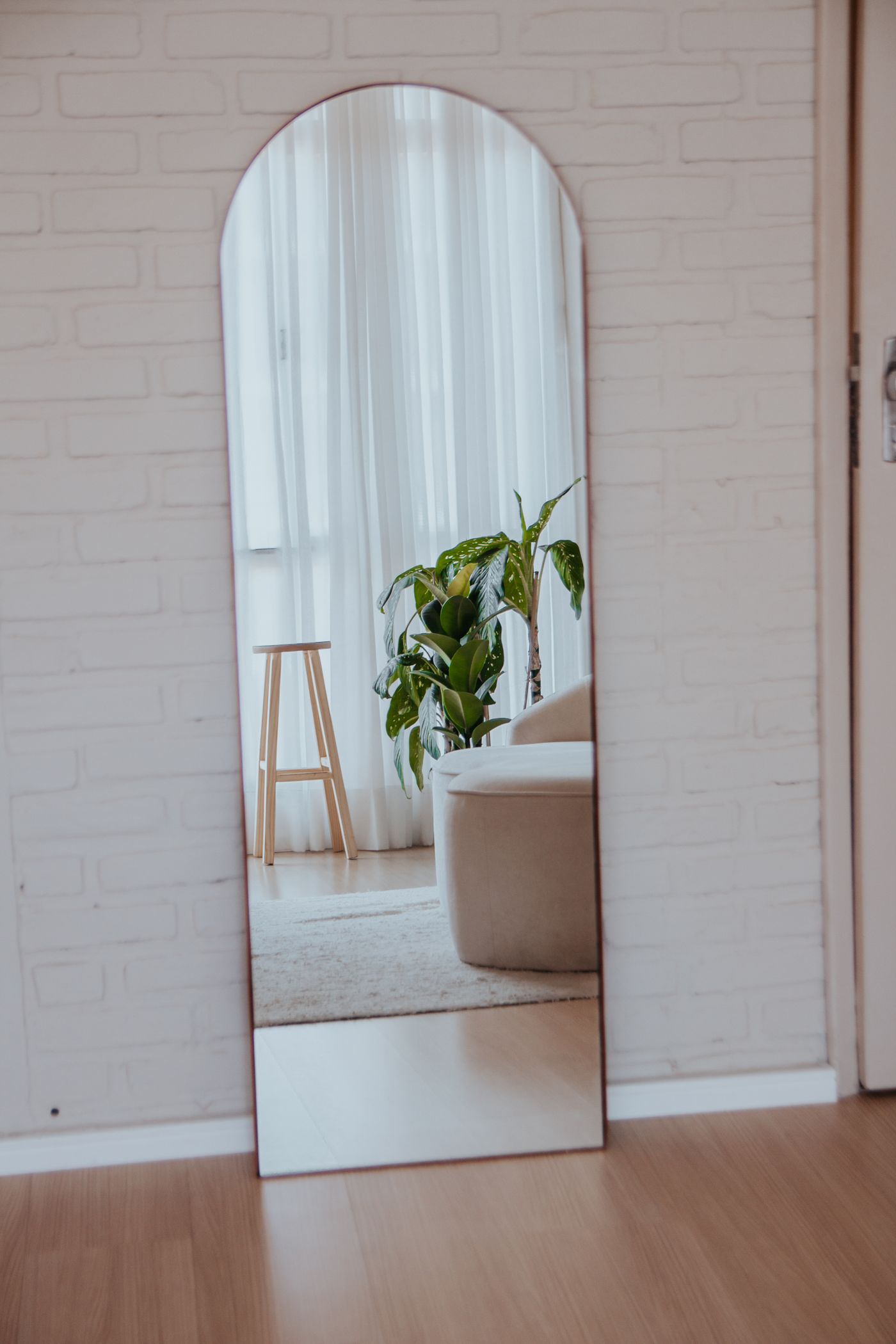
The curved top breaks up the straight lines of doors, windows and furniture. Arched mirrors work as full-length leaners in a bedroom or as a tall piece above a console. Thin metal frames keep them modern. Heavy gilded frames push them toward traditional.
3. Round mirrors
A round mirror softens a room full of rectangles: sofas, tables, cabinets and doorways. It is a natural fit above an entryway console or a bedroom dresser. A single large circle usually looks better than several small ones.

4. Geometric and matte black mirrors
Hexagons, thin rectangles and black metal frames bring contrast and a graphic edge. They suit offices, dining areas and rooms with white or pale walls. Because the frame is the feature, check that the black or metal finish matches your lighting and hardware. Large matte black framed mirrors are easy to find if you want to compare sizes.
5. Smoked glass mirrors
Smoked or tinted glass gives a softer, darker reflection that feels moody and expensive. It works well in dining rooms and in lounges with lamp lighting. It reflects less light than clear glass, so it will not brighten a dim room the way a clear mirror does.
6. Sculptural and organic-shaped mirrors
Pebble, wave and asymmetrical shapes turn a mirror into wall art. Use one as the only feature on a wall, with plain paint around it. Two statement shapes on the same wall compete.
7. Backlit LED mirrors
Backlit mirrors add soft light around the edge and are most useful in bathrooms, dressing areas and entryways. Check that the product is rated for your room, especially for bathroom use, and plan where the power cable will run before you pick the position.
8. Oversized leaner mirrors
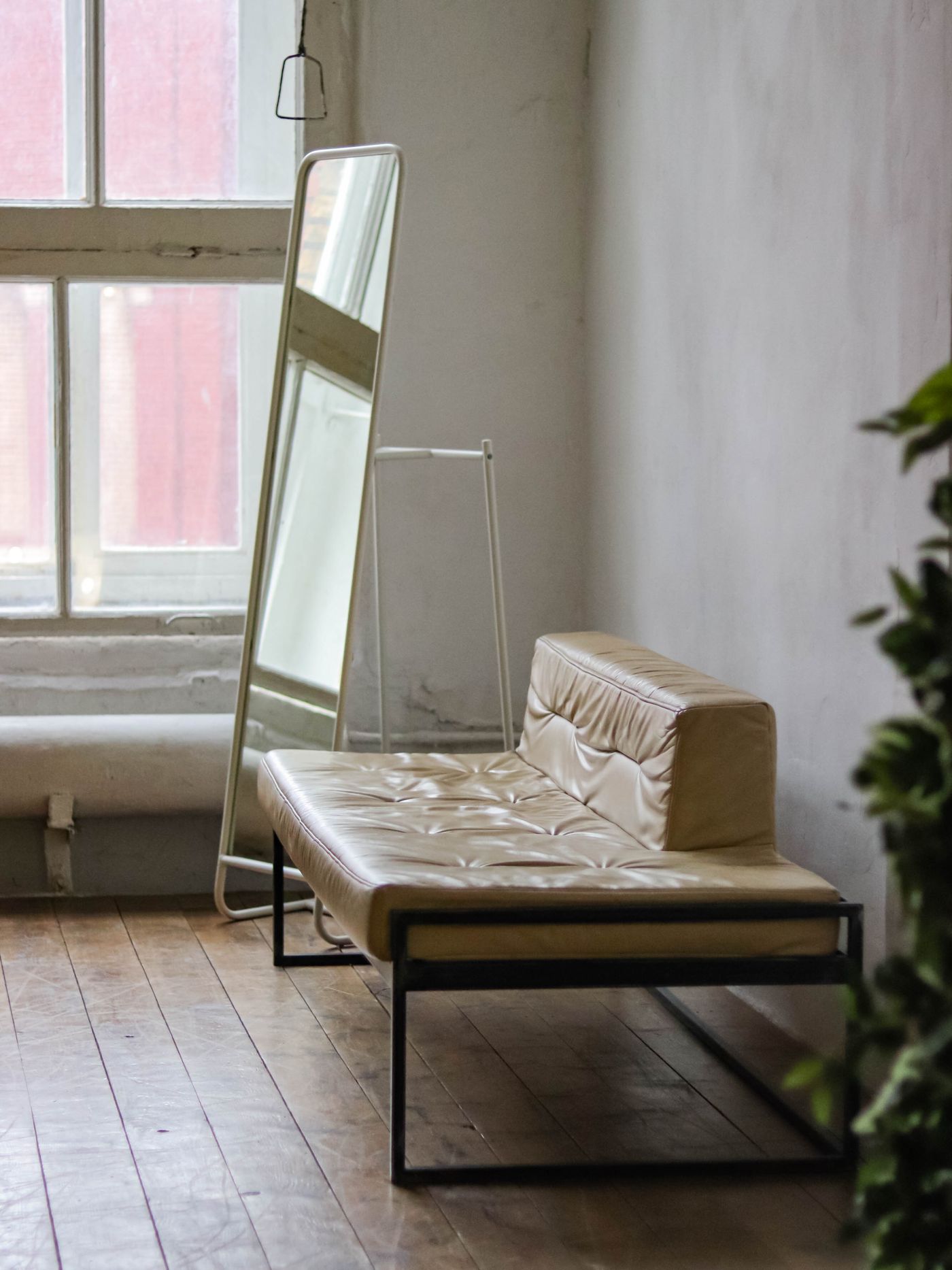
A tall mirror that leans against the wall needs no drilling, which suits renters. It makes a bedroom or living room look taller and brighter. Keep the base stable and anchored if there are children or pets, because a large leaner can tip.
9. Brass-framed rectangular mirrors
A slim brass or gold-toned frame is the modern way to add warmth. It pairs with wood, marble and neutral walls and works over a dresser, console or fireplace. A thin frame keeps it modern. A thick, carved one does not.
Quick comparison
| Style | Best for | Watch out for |
|---|---|---|
| Frameless | Small rooms, hallways | Can look plain without good lighting |
| Arched | Bedrooms, above consoles | Heavy frames feel traditional |
| Round | Entryways, dressers | Looks lost if it is too small |
| Geometric / matte black | Offices, dining areas | Strong look, so use one |
| Smoked glass | Dining rooms, lounges | Reflects less light |
| Sculptural | Feature walls | Competes with other statement pieces |
| Backlit LED | Bathrooms, dressing areas | Needs a power plan |
| Leaner | Renters, bedrooms | Tip risk if not secured |
| Brass-framed | Over dressers and consoles | Thick frames look dated |
How big should a modern mirror be?
For a mirror above furniture such as a console, sideboard or dresser, a common rule is to make it about two-thirds of the furniture’s width. For example, a 48-inch console usually suits a mirror of roughly 30 to 36 inches. Retailer guides give slightly different ranges, so treat the numbers as a starting point and cut a paper template to check the look on your wall.
For a standalone mirror, go larger than you think. A small mirror on a big wall looks lost, while an oversized one reads as intentional.
How high should you hang it?
Most guides put the centre of a wall mirror at about 57 to 65 inches from the floor, which is close to average eye level. Over a console or table, leave a gap of several inches between the furniture and the bottom edge of the mirror. Guides quote anything from about 4 to 12 inches for that gap, so the exact number matters less than keeping it consistent and close enough that the two read as a pair. If the people using the mirror are much taller or shorter than average, move the centre up or down to match.
Want exact numbers for your wall? Use our picture and mirror hanging height calculator. These figures come from retailer and design guides that do not fully agree with each other. See the sources below, and check the result in your own room before you drill.
Frame materials
- Metal (brass, steel, black powder-coat): thin, strong and modern. Good for large mirrors.
- Wood: warmer and softer. Avoid unsealed wood in a humid bathroom.
- Frameless: cleanest look. Edges can chip, so handle with care.
- Resin or composite: lighter and cheaper, but check the finish quality in reviews.
How to hang a heavy mirror safely
- Find the weight on the product page or box before you buy hardware.
- Locate wall studs with a stud finder and fix into them where you can.
- If no stud lines up, use wall anchors rated well above the mirror’s weight.
- For very large or heavy mirrors, use a French cleat or a hanging system that spreads the load, and have a second person help.
- Mark the position with painter’s tape first and step back to check it.
If you are unsure about your wall type, ask a qualified installer. A falling mirror is both dangerous and expensive.
Where to place a modern mirror
- Opposite or beside a window: it bounces daylight deeper into the room.
- Entryway: a round or arched mirror above a console is the classic spot. See our hallway decorating ideas for narrow spaces.
- Bedroom: a tall leaner by a wall or wardrobe, away from the bed’s direct line if you prefer.
- Living room: above a sofa or sideboard. Our guide to decorative mirrors for the living room goes deeper on this room.
- Bathroom: centre it over the sink and keep it clear of splashes.
Looking for something rustic instead? Read our farmhouse bathroom mirror guide, or compare retailer options in 7 mirror options for home decor.
How Do You Pick the Right Mirror Size for Each Room?
A useful guideline is to choose a mirror around two thirds to three quarters of the width of the furniture beneath it. Over a console or sideboard this gives a balanced composition, and over a fireplace it ties the mantel and wall together. In a hallway, taller mirrors help you check your outfit and make the space feel more open.
Think about height as well. The centre of the mirror should sit near average eye level, so hang it at a height that suits the people who use the room. Leaning a floor mirror against a wall gives a relaxed, modern look and avoids drilling.
Measure the wall and use paper templates before you buy. Consider the weight of the frame and the type of wall so that you can choose suitable fixings.
Which Mirror Shapes Suit Which Rooms?
Round and oval mirrors soften rooms full of straight lines, such as a modern living room or a bathroom with square tiles. Arched mirrors create an elegant, architectural feel and work well in bedrooms and entrances. Rectangular mirrors suit classic interiors and narrow walls.
Mix shapes with care. A round mirror beside rectangular frames can add rhythm, but too many different shapes can look chaotic. Keep one dominant shape and use the others as accents.
Consider how the shape interacts with the view. A mirror should reflect something pleasant such as a window, a lamp or artwork, not a cluttered corner.
How Do You Maintain a Mirror and Keep It Safe?
Clean with a soft cloth and a gentle glass cleaner, avoiding harsh chemicals on the frame. Check hanging hardware periodically and make sure heavy mirrors are fixed to suitable anchors. In homes with children or pets, secure large leaning mirrors to the wall to prevent tipping.
Place mirrors away from direct, intense sunlight that could create glare or heat, and keep them clear of damp areas unless designed for bathrooms.
How Do You Group Several Mirrors on One Wall?
A gallery of mirrors can make a bold statement. Start by laying the pieces on the floor and arranging them until the overall shape feels balanced. Keep consistent spacing, often around five to eight centimetres, and choose a common element such as frame colour or shape so the group feels unified rather than random. Take a photograph of your layout, then hang the largest piece first and build outwards.
Think about what the group will reflect. Mirrors opposite windows bounce daylight deeper into a room, while mirrors opposite lamps create a soft glow at night. Avoid pointing them at clutter, which will be doubled.
Choose lighter frames in small rooms and bolder frames where you want a focal point. Mixed metal finishes can work if one tone is repeated throughout the room.
What Should You Check Before Buying a Mirror Online?
Check the exact dimensions, including the frame, and the weight. Look for details on the glass thickness, the backing and the hanging system. Read customer photos and reviews, since lighting in product pictures can hide flaws. Make sure the delivery packaging is suitable for fragile items and check the returns policy before ordering.
Consider the finish. Antiqued mirrors have a soft, aged look that suits traditional rooms but may show less clear reflection. Standard mirrors are clearer and brighter. Choose the finish that fits your use, whether that is checking your outfit or adding atmosphere.
How Do Mirror Styles Change Through 2027?
Looking ahead to 2027, curved and arched shapes, slim metal frames and natural wood remain popular, along with large floor mirrors that make rooms feel open. Instead of chasing a single style, choose a mirror you love and that suits your room, because quality mirrors last for many years and can be moved between rooms.
Quick recap checklist
Use this short checklist to confirm you have covered the main points of this guide to modern mirrors before you start.
- 9 modern mirror styles and where they work
- 1. Frameless mirrors
- 2. Arched mirrors
- 3. Round mirrors
- 4. Geometric and matte black mirrors
- 5. Smoked glass mirrors
- 6. Sculptural and organic-shaped mirrors
- 7. Backlit LED mirrors
- 8. Oversized leaner mirrors
- 9. Brass-framed rectangular mirrors
- Frame materials
- How to hang a heavy mirror safely
- Where to place a modern mirror
Before you start: five questions to ask yourself
A few honest answers now will save time and money later. Write them down and keep them close while you shop or plan.
- What is the main purpose of this space or piece, and who will use it every day?
- What are the exact measurements, and have you marked them out with tape or paper before buying?
- Which colours and materials already exist in the room, and will your choice for modern mirrors work with them rather than compete?
- What budget have you set, and which part deserves the most spending: the piece you touch every day or the accents?
- Could you live with this choice for at least a year, or would a smaller, easily changed version be wiser?
Frequently asked questions
How big should a modern mirror be for a living room wall?
Over a sofa or sideboard, aim for about two-thirds of the furniture’s width. For a standalone feature mirror, go larger than feels comfortable at first.
Are arched mirrors still popular?
Yes. Arched mirrors remain a common choice because they soften square rooms. A thin metal frame keeps them modern, while an ornate frame makes them look traditional.
What is the difference between a frameless and a minimalist framed mirror?
A frameless mirror has only a polished or bevelled glass edge. A minimalist framed mirror has a very thin metal or wood frame. The frame adds definition and protects the edge.
Can a mirror make a small room look bigger?
It can make a room feel brighter and deeper by reflecting light and the view, especially when placed near a window. It does not change the real size of the room.
What height should I hang a mirror in a hallway?
Most guides centre it at about 57 to 65 inches from the floor. Adjust a few inches up or down for the people who use it most.
Is a leaner mirror safe?
It is safe when the base is stable and the mirror is secured to the wall with a strap or bracket. Use this extra step in homes with children or pets.
Sources
- Tribesigns: how high to hang a mirror over a console table
- Frametolia: how high to hang a mirror
- The Mod Studio: how high to hang a mirror over a console or mantel
- 7 Javaherian: what size mirror over a console
The height and width figures above are ranges from these retailer guides, which differ slightly. They are general design guidance, not building regulations.