Last updated: November 4, 2026
Quick answer: An authentically rustic garden earns its character through age, imperfection, and a visible connection to the natural world. It is not a catalog aesthetic; it is a mood built from honest materials and plants that genuinely thrive outdoors.
Key takeaways
- The foundation of any rustic outdoor scheme is its material palette, and that palette should stay close to what occurs naturally in the ground beneath your feet.
- Layering rustic textures means stacking different surface qualities so the eye moves through the space rather than stopping at a single focal point.
- Outdoor rustic accents with genuine age or convincing provenance transform a pleasant garden into one that tells a story.
- The right plants do more to establish a rustic feel than any ornament or furniture piece.
- Rustic outdoor lighting should feel like it grew from the garden rather than arrived in a delivery box.
There is something deeply satisfying about a garden that looks as though it has always been there. Rustic garden decor ideas draw on natural materials, imperfect textures, and a relaxed sense of abundance that no polished showroom can replicate. Done well, a rustic outdoor space feels genuinely lived-in and quietly luxurious at the same time. This guide walks through every layer of creating that effect, from the ground up.

What Makes a Garden Feel Authentically Rustic?
An authentically rustic garden earns its character through age, imperfection, and a visible connection to the natural world. It is not a catalog aesthetic; it is a mood built from honest materials and plants that genuinely thrive outdoors.
The country garden aesthetic relies on surfaces that show their history. A stone wall with a little moss, a wooden gate that has silvered in the sun, a clay pot that has absorbed years of rain — these details signal authenticity in ways that new plastic decor never can.
Rural garden landscaping also depends on a certain looseness. Straight lines and rigid symmetry belong to formal garden traditions. A rustic space favors gentle curves, slightly uneven plantings, and decor that seems to have been gathered over many years rather than purchased in an afternoon.
- Choose materials that age gracefully: untreated oak, natural limestone, and hand-thrown pottery.
- Allow some imperfection — a leaning fence post or a cracked pot adds rather than subtracts.
- Layer different eras of objects so the space looks collected, not curated.
The farmhouse garden decor tradition, popularized across American homesteads for centuries, is the clearest reference point for this style. It values function, durability, and beauty that improves with use.
Choosing Natural Materials: Wood, Stone, and Weathered Metal
The foundation of any rustic outdoor scheme is its material palette, and that palette should stay close to what occurs naturally in the ground beneath your feet.
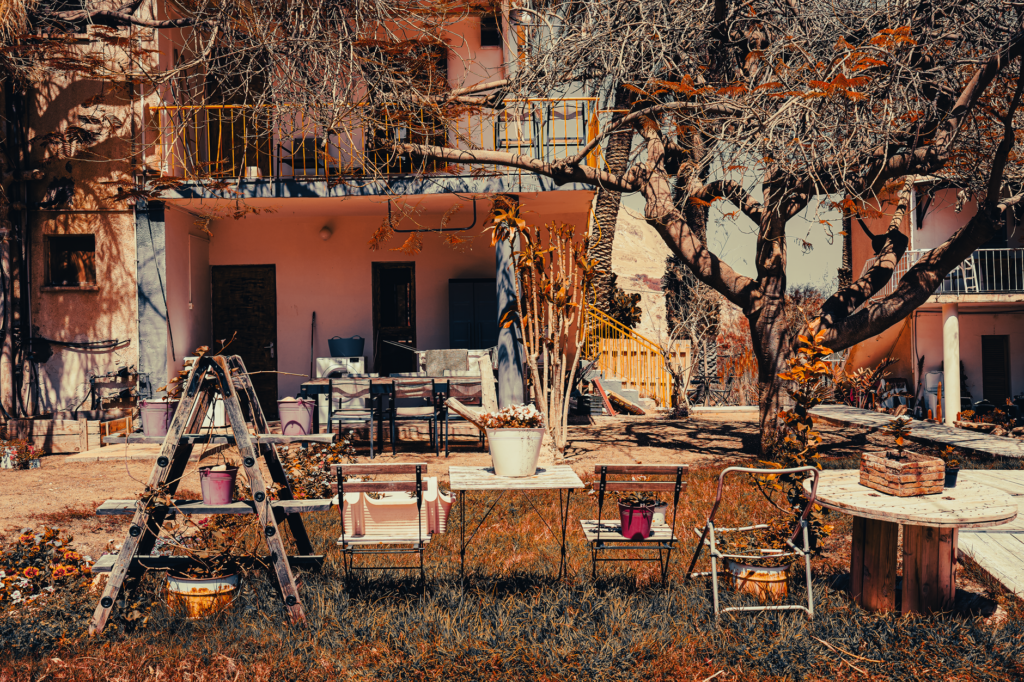
Weathered wood garden furniture is the single most impactful investment you can make. Reclaimed oak, cedar, or pine that has been left to silver outdoors carries a warmth that painted or synthetic alternatives simply cannot match. Reclaimed wood planter boxes are particularly effective because they introduce that warm, grain-rich texture right at eye level among the planting.
Natural stone pathways anchor the garden visually and physically. Irregular flagstones, cobbles, or crushed granite laid in a relaxed pattern create a sense of age that poured concrete cannot reproduce.
Wrought iron garden decor — from simple plant stands to ornate archways — provides structural contrast against soft planting. Iron weathers to a rich, reddish-brown patina that looks striking against green foliage. Aged metal garden sculptures placed at the end of a path or nestled in a bed of herbs create focal points that feel genuinely old.
I worked on a farmhouse renovation in rural Virginia in early 2027 where the homeowners had a pile of salvaged barn wood sitting unused. We built a series of barn wood garden beds along the kitchen garden wall, and the result was immediately the most photographed feature of the entire property. The wood’s natural silver-gray tone tied every other element together without a single coat of paint.
How Do You Layer Rustic Textures for Visual Depth?
Layering rustic textures means stacking different surface qualities so the eye moves through the space rather than stopping at a single focal point.
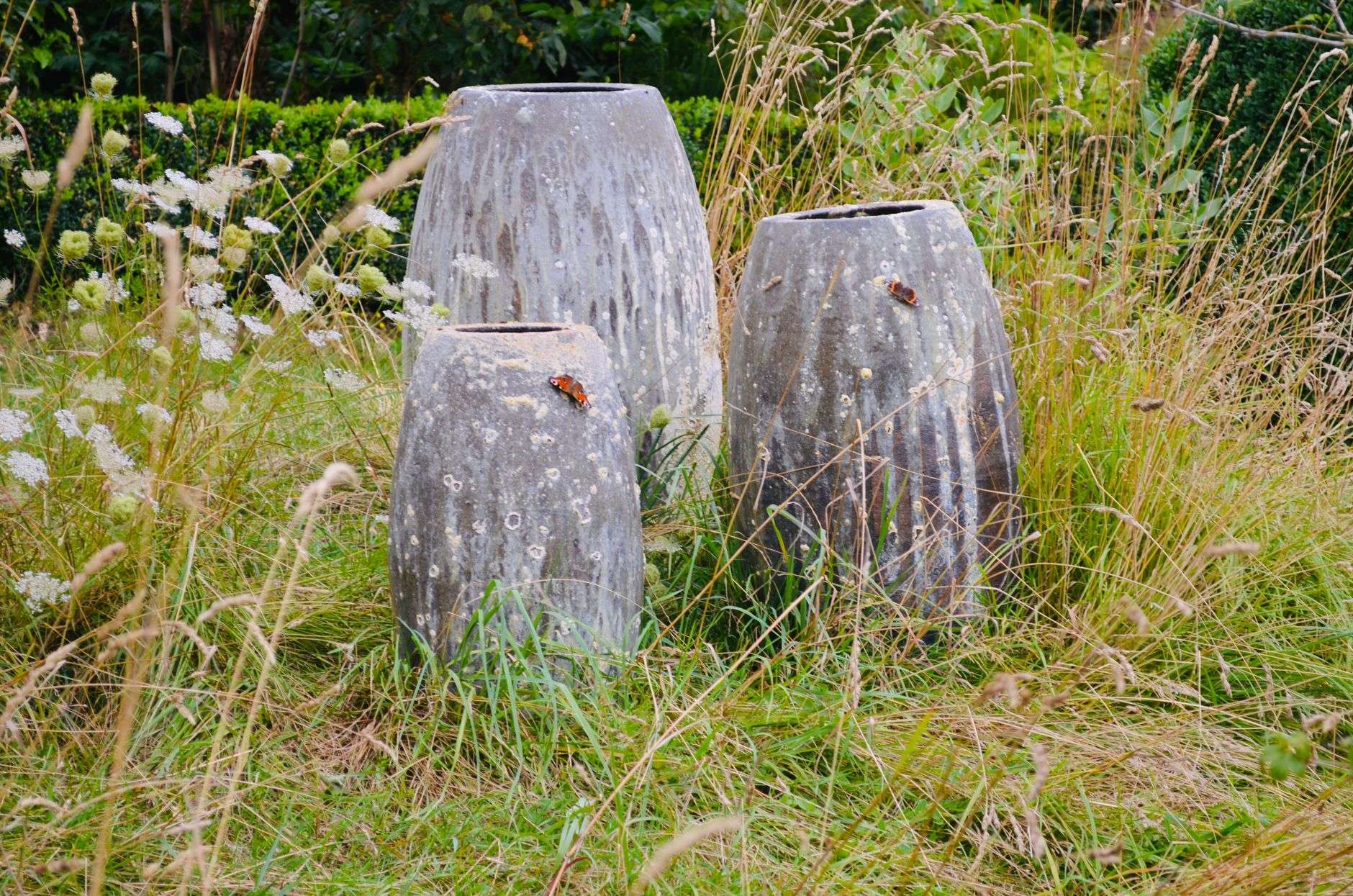
Start at ground level. Natural stone pathways or compacted gravel create a base layer that is visually quiet but physically engaging. Add distressed terracotta pots in varying heights along the edges; their porous, chalky surface contrasts beautifully with smooth stone. Mixing at least three distinct surface textures in any outdoor vignette prevents the space from reading as flat or staged.
At mid-height, introduce woven wicker garden furniture alongside the heavier wooden pieces. The softness of wicker plays against the solidity of reclaimed timber and the hardness of stone. Drape a linen or cotton throw over a wicker chair to add another tactile layer that also invites use.
Moss covered garden art — whether a stone sphere, a low wall cap, or a cast iron urn — introduces a living texture that changes subtly with moisture and light. Encourage moss growth by painting surfaces with a diluted yogurt solution, a technique recommended by Veranda (2026) for creating authentic patina quickly.
At the highest level, climbing roses, ivy, or Virginia creeper trained over wooden arches and stone walls add a final soft layer that makes the whole composition breathe.
Vintage and Antique Accents That Elevate Outdoor Spaces
Outdoor rustic accents with genuine age or convincing provenance transform a pleasant garden into one that tells a story.
Antique garden ornaments — cast stone urns, lead planters, Victorian boot scrapers, or salvaged finials — carry a material density that reproductions rarely achieve.
Vintage garden accessories do not need to be genuinely antique to work well. Artisan garden pottery thrown in traditional styles, aged metal garden sculptures cast from original molds, and vintage garden accessories sourced from estate sales all contribute the same lived-in quality. The key is avoiding objects that look mass-produced or overly shiny.
For smaller budgets, a single striking vintage piece — an old stone trough planted with sedums, or a wrought iron garden gate repurposed as a trellis — anchors the whole scheme. You do not need to fill every corner with antiques. One or two genuine pieces do the work of many imitations.

Rustic Planting Schemes: Wildflowers, Herbs, and Heirloom Varieties
The right plants do more to establish a rustic feel than any ornament or furniture piece.
A wildflower garden design starts with accepting that controlled perfection is the enemy. Cornflowers, ox-eye daisies, echinacea, and black-eyed Susans planted in loose drifts create the kind of generous, slightly chaotic beauty that defines the cottage garden style.
Heritage garden plants also carry meaning. An old rose variety like ‘Rosa gallica officinalis’ or a heritage lavender like ‘Hidcote’ connects a garden to centuries of cultivation. These plants are often more fragrant, more structurally interesting, and more attractive to pollinators than modern cultivars.
Herbs deserve a prominent place in any rustic scheme. Rosemary grown into a low hedge, thyme creeping between flagstones, and fennel rising in feathery columns above shorter planting are all practical, sensory, and beautiful. They reinforce the farmhouse garden decor tradition of beauty serving a purpose.
- Plant in odd numbers and allow self-seeding for a naturalistic effect.
- Include structural plants like foxglove or hollyhock to add vertical rhythm.
For a truly luxurious interpretation, layer heritage roses over a reclaimed stone wall, underplanted with silver-leaved artemisia and dark-leafed geraniums. The combination of color, texture, and fragrance creates a sensory experience that no single ornament can match.

What Lighting Works Best in a Rustic Garden Setting?
Rustic outdoor lighting should feel like it grew from the garden rather than arrived in a delivery box.
Lantern-style fixtures in aged iron or blackened steel are the most versatile choice. Hung from timber beams, placed on stone plinths, or set along a path, they cast warm, soft pools of light that suit the relaxed character of a rustic space. Warm-toned bulbs in the 2200K to 2700K range are strongly preferred for outdoor rustic schemes because they replicate the quality of candlelight.
Vintage-style outdoor lanterns in a matte black or verdigris finish work well clustered at different heights around a seating area. String lights with Edison-style bulbs threaded through overhead branches create a canopy effect that is particularly beautiful on summer evenings.
Solar-powered stake lights in a simple hammered metal finish are a practical choice for path lighting. They require no wiring and age naturally alongside the other garden materials. Candles in storm lanterns placed on an outdoor table add flicker and warmth for dining occasions.
Avoid cool-white or blue-toned LED lights entirely. They work against the warm, aged feeling that every other element in the garden is working to create. The most compelling outdoor lighting schemes in luxury properties use layered sources at varying heights rather than a single overhead fixture.
Blending Rustic Charm with Luxury Home Decor Sensibilities
A rustic garden can feel genuinely luxurious when the quality of individual elements is prioritized over quantity.
The difference between a rustic garden that reads as neglected and one that reads as intentionally refined is almost entirely material quality. A single handmade ceramic garden planter from an artisan potter will outperform six mass-produced pots in terms of visual impact and longevity. Artisan garden pottery, specifically pieces that show the maker’s hand, brings the same quiet luxury to an outdoor space that hand-thrown ceramics bring to a dining table.
Woven wicker garden furniture in a natural, unbleached finish paired with linen or Sunbrella cushions in muted, natural tones bridges the gap between comfort and character. The most successful luxury outdoor rooms in 2027 treat the garden as an extension of the interior, using the same principles of material quality and considered proportion.
I recently helped a client in Connecticut merge her very modern interior — all clean lines and neutral plasters — with a rustic kitchen garden she wanted to add. The solution was to use the same limestone that appeared inside the house for the garden path, then build upward with reclaimed wood and generous planting. The limestone created a material thread between indoors and out, and the garden felt both luxurious and genuinely rustic.
You can also find inspiration in our guide to top 10 home decor items for ideas on how natural materials translate beautifully from indoor to outdoor spaces.

How to Maintain a Rustic Garden Without Losing Its Character
Maintaining a rustic garden is about managing natural processes rather than fighting them.
Weathered wood garden furniture should be treated once a year with a penetrating oil — linseed or tung oil both preserve the wood while allowing its natural silver-gray tone to continue developing. Do not use varnish or paint; both create a surface that looks out of place and requires more frequent maintenance.
Wrought iron garden furniture benefits from a light wire-brushing each spring to remove loose rust, followed by a coat of matte black wax or a rust-converting primer on any bare spots. This keeps the iron stable without making it look newly painted.
Distressed terracotta pots should be brought under cover during hard frosts or wrapped in hessian. The freeze-thaw cycle accelerates cracking in porous ceramics. In mild climates, leaving them outdoors year-round actually enhances their character.
- Deadhead spent wildflowers but leave seed heads on through autumn for wildlife and winter structure.
- Re-gravel or re-sand stone path joints every two to three years to control weed growth without removing the natural feel.
The most important principle is to resist the urge to over-clean. A little algae on a stone urn, a streak of mineral bloom on a terracotta pot, or a patch of self-seeded forget-me-nots in the gravel — these are signs that the garden is alive and developing its own character. That character is exactly what you set out to create.
For more ideas on how to bring character to different areas of your property, the guide on 9 best garage decor ideas for modern homes offers transferable principles on layering texture and material in utilitarian spaces.

Rustic Garden Decor Product Comparison
| Item | Material or Style | Best For | Price Tier |
|---|---|---|---|
| Reclaimed Wood Raised Garden Bed | Aged pine or oak, barn wood finish | Kitchen gardens and vegetable beds | Mid to High |
| Cast Iron Garden Urn Planter | Cast iron, antiqued finish | Focal point planting and entrance displays | High |
| Woven Wicker Outdoor Chair | Natural rattan or resin wicker | Seating areas and garden rooms | Mid |
| Solar Hammered Metal Path Lantern | Hammered steel, matte black or bronze | Path and border lighting | Low to Mid |
| Large Aged Terracotta Garden Pot | Hand-thrown terracotta, distressed glaze | Statement container planting | Mid |
Frequently Asked Questions
What are the best rustic garden decor ideas for a small backyard?
In a small backyard, focus on vertical interest and restraint. A single reclaimed wood planter wall, a wrought iron arch with climbing roses, and two or three large distressed terracotta pots will do more than a crowded mix of smaller pieces. Natural stone pathways even in short runs create a sense of depth. Keep the planting generous and the ornaments minimal. One strong vintage accent — an old trough or a stone sphere — anchors the whole space without overwhelming it.
How do I make my garden look rustic without spending a lot of money?
Start with what you have. Sand or wire-brush any existing metal garden furniture to expose the raw metal, then leave it to develop a natural patina. Source aged terracotta pots and antique garden ornaments from estate sales, flea markets, or online marketplaces. Grow plants from seed — wildflowers and herbs are inexpensive and fast to establish. Allow moss to develop on existing stones and walls by keeping surfaces damp and shaded. The rustic look rewards patience over spending.
What materials are most commonly used in rustic garden design?
The most common materials in rustic garden design are reclaimed or untreated wood, natural stone, cast iron, wrought iron, and hand-thrown terracotta. Secondary materials include woven wicker, aged copper, limestone, and rough-hewn granite. The unifying quality across all these materials is that they age visibly and attractively outdoors. Synthetic materials that mimic these textures rarely achieve the same effect because they lack the density and patina that natural aging creates.
Which plants work best in a rustic cottage garden style?
Heritage roses, foxgloves, hollyhocks, echinacea, lavender, and ox-eye daisies are all classics of the cottage garden style. Herbs including rosemary, thyme, sage, and fennel add fragrance and practicality. Climbing plants like clematis, honeysuckle, and Virginia creeper soften hard surfaces beautifully. Self-seeding annuals such as cornflowers, nigella, and California poppies fill gaps and create the slightly unplanned abundance that defines a genuinely rustic planting scheme.
How do I choose rustic garden decor that also looks luxurious?
Prioritize material quality above quantity. One piece of genuine artisan garden pottery or a real cast iron urn will read as luxurious in a way that ten inexpensive reproductions never will. Look for objects with visible handcraft — irregular glazes, hand-forged metalwork, or stone that shows tool marks. Pair rustic pieces with high-quality textiles such as linen or Sunbrella cushions. The contrast between rough-textured natural materials and refined soft furnishings is exactly what creates a luxurious rustic feeling.
Can rustic garden decor work in a modern home setting?
Rustic garden decor works very well alongside modern architecture when a shared material thread connects both spaces. Using the same stone inside and outside, or echoing an interior wood tone in the garden furniture, creates visual continuity. Keep the rustic garden elements generous and naturalistic rather than fussy, and the contrast with clean architectural lines becomes an asset rather than a conflict. The lush informality of a rustic garden actually flatters a modern home by softening its geometry.
What is the easiest way to add a rustic feel to a patio or deck?
The single fastest change is replacing any plastic or powder-coated metal furniture with weathered wood or woven wicker pieces. Follow that with two or three large distressed terracotta pots planted with herbs or trailing plants. Add a vintage-style lantern or a set of Edison-bulb string lights overhead. Finally, place one statement vintage accent — a stone trough, an aged iron urn, or a moss-covered sphere — as a focal point. These four steps transform almost any patio in an afternoon.
How do I keep rustic garden decorations looking good through all seasons?
Oil wooden pieces once a year in spring. Wire-brush and wax iron items each spring to stabilize surface rust. Bring porous terracotta indoors or wrap it during hard freezes. Leave seed heads and some structural dried planting through winter for both visual interest and wildlife value. Clean stone paths by brushing rather than pressure-washing, which strips the natural patina. The goal is to support the natural aging process, not reverse it, so seasonal maintenance should be light and targeted rather than intensive.
Related reading: Rustic Garden Planters: Which Styles Elevate Your Outdoor Space?
Sources
- Architectural Digest (2026)
- House Beautiful (2026)
- Elle Decor (2026)
- Veranda (2026)
- The Metropolitan Museum of Art (2026)
- The Royal Horticultural Society (2026)
- Better Homes and Gardens (2026)
- Architectural Digest — Outdoor Lighting (2026)