Last updated: November 4, 2026
Quick answer: A truly rustic garden planter combines raw, natural materials with an intentionally aged or handcrafted aesthetic. It is not simply old or worn — it carries a deliberate visual weight that reads as authentic rather than mass-produced.
Key takeaways
- Choosing the right rustic planter starts with your home’s existing architectural language and the overall outdoor mood you want to create.
- The material of your planter determines its longevity, its visual character, and how it ages — and all three matter equally in a luxury outdoor context.
- Size and shape are the two most overlooked decisions in planter selection, yet they are the ones most likely to make your outdoor space look polished or haphazard.
- Rustic planters look their most luxurious when they are styled with the same intentionality you would apply to decorating an interior room.
- Proper maintenance is what separates a planter that looks beautifully aged from one that simply looks neglected.
Your outdoor space deserves as much design attention as your living room. Rustic garden planters have emerged as one of the most sought-after elements in luxury home exteriors, blending organic texture with refined style. The right planter does more than hold soil — it sets a tone, frames an entrance, and tells a story about your aesthetic values. Whether you are working with a sprawling estate garden or a compact city patio, the style, material, and placement of your planters can make or break the overall look. In this guide, I break down exactly which rustic planter styles work best, how to choose them, and how to maintain them through every season.
What Makes a Garden Planter Truly Rustic in 2027?
A truly rustic garden planter combines raw, natural materials with an intentionally aged or handcrafted aesthetic. It is not simply old or worn — it carries a deliberate visual weight that reads as authentic rather than mass-produced.
In 2027, rustic planters draw from several design traditions. Country garden aesthetics, farmhouse outdoor planters, and antique-style plant containers all fall under this umbrella. What unites them is an emphasis on texture and story. Think of the satisfying weight of stone garden urns, the grain of cedar planter boxes, or the deliberate imperfections on artisan handcrafted planters.
Key characteristics that define rustic garden planters today include:
- Natural or distressed finishes that highlight material origin — wood grain, stone veining, or metal oxidation.
- Handmade or artisan details such as hand-forged iron hardware or hand-thrown pottery edges.
- Earthy color palettes — warm browns, muted grays, aged greens, and terracotta tones.
The distinction between rustic and shabby is important. A luxury rustic planter looks intentional. Every chip, weld mark, or patina has been curated.
How to Choose the Right Rustic Planter for Your Outdoor Style
Choosing the right rustic planter starts with your home’s existing architectural language and the overall outdoor mood you want to create.
A Federal-style home with symmetrical columns calls for paired stone garden urns or aged bronze garden urns placed at the entrance. A modern farmhouse, on the other hand, works beautifully with clean-lined reclaimed wood planter boxes or galvanized steel planters that carry industrial warmth.
Start by asking three questions. What is the dominant material of your home’s exterior — brick, stone, wood, or stucco? What is your preferred plant palette — lush and overflowing or structured and sculptural? And how much maintenance are you realistically prepared to commit to each season?
Mixing two or three planter materials in the same outdoor zone creates depth without visual chaos, as long as the color palette remains consistent. For example, pairing weathered terracotta pots with a single large cedar planter box grounds the arrangement in complementary earth tones.
I always remind clients to consider scale relative to architecture. In a recent project in Charleston, South Carolina, a homeowner had purchased beautiful farmhouse outdoor planters that were simply too small for their wide front porch columns. Swapping to large garden planters — at least 18 inches in diameter — instantly made the entrance feel intentional and luxurious rather than afterthought.
For more inspiration on tying outdoor elements into a cohesive home design strategy, see our guide on top 10 garden design ideas to beautify your home garden.
Top Materials for Rustic Garden Planters: Wood, Stone, and Metal
The material of your planter determines its longevity, its visual character, and how it ages — and all three matter equally in a luxury outdoor context.
Wood is the most versatile rustic material. Cedar planter boxes are particularly popular because cedar’s natural oils resist rot and insects without chemical treatment. Reclaimed wood planter boxes carry visual stories — old barn boards, salvaged timber, and railway sleepers all develop beautiful silver-gray patinas outdoors. Reclaimed and natural finish planters are among the top-performing categories in outdoor luxury decor.
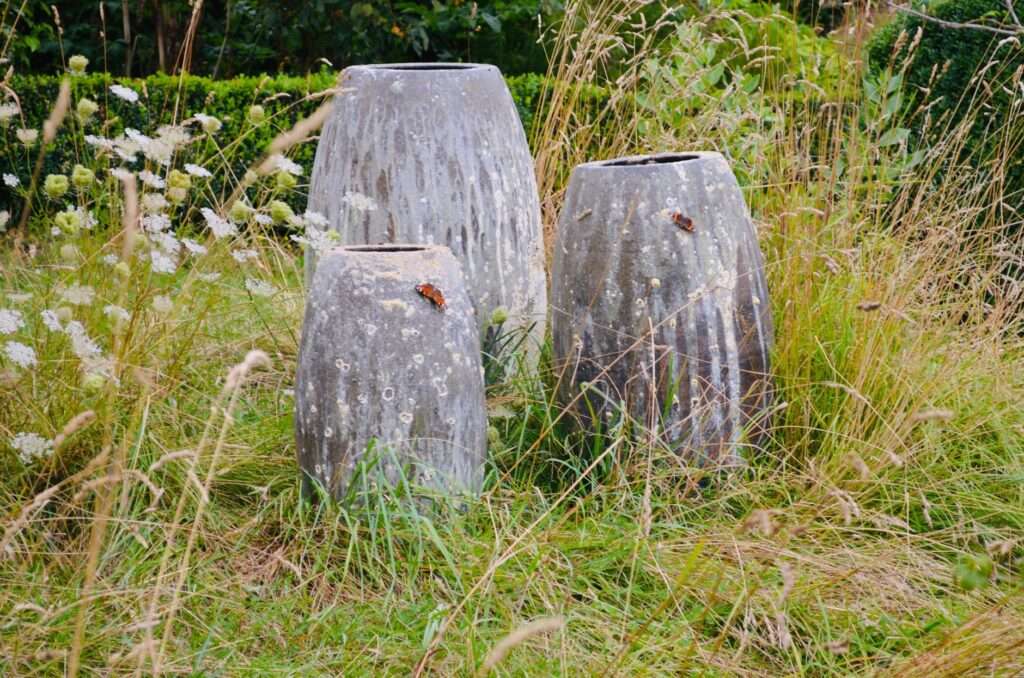
Stone offers permanence and a classical weight. Stone garden urns and carved limestone containers develop a mossy patina over years that is almost impossible to replicate artificially. They suit formal garden layouts and grand entrances particularly well.
Metal provides industrial edge and a range of patina possibilities. Distressed metal planters and galvanized steel planters wear weather beautifully. Galvanized steel planters are especially durable in wet climates. Aged bronze and wrought iron both develop rich oxidized tones over time.
Each material has trade-offs:
- Wood requires annual sealing or oiling in humid climates to prevent warping.
- Stone is heavy and difficult to reposition once placed, so plan placement carefully.
- Metal can heat up significantly in direct sun, which can stress plant roots in summer.

Which Rustic Planter Sizes and Shapes Work Best for Different Gardens?
Size and shape are the two most overlooked decisions in planter selection, yet they are the ones most likely to make your outdoor space look polished or haphazard.
Large garden planters — those 20 inches or wider — work best as anchor pieces. Place them at garden entry points, flanking steps, or at the corners of a patio. They can hold statement plants like olive trees, standard topiaries, or ornamental grasses. Proportion is the single most important factor in outdoor decorating success.
Medium planters, roughly 12 to 18 inches, are the workhorses of a garden arrangement. They group well in odd numbers — three or five of varying heights creates a natural-looking cluster. Farmhouse outdoor planters in this size range are ideal for porches and patios.
Window box planters are a distinct category that serves both function and curb appeal. A well-planted window box planter along a porch railing or beneath a ground-floor window adds a European country garden quality that photographs beautifully. Raised garden bed planters, meanwhile, blur the line between decor and kitchen garden — and are increasingly being integrated into luxury patio design as edible landscaping gains popularity.
Shape also matters. Rectangular planter boxes align well with linear architectural features — steps, railings, and fences. Rounded urns and tapered pots soften hard edges and add classical character. Tall, column-style planters draw the eye upward and work well on patios that lack vertical interest.
Styling Rustic Planters with Luxury Home Decor Principles
Rustic planters look their most luxurious when they are styled with the same intentionality you would apply to decorating an interior room.
The foundational principle is layering. Pair a tall architectural plant — a sculpted boxwood or a standard bay tree — in a large stone garden urn, then surround it with lower, trailing plants in medium decorative outdoor pots. This creates visual depth and makes the arrangement look considered rather than casual.
Color consistency is essential. If your home exterior features warm brick tones, lean into amber, terracotta, and aged wood for your planters. Cooler stone or white-render homes pair better with limestone urns, gray concrete planters, or silver-toned galvanized metal.
Patio planter ideas rooted in luxury design also embrace negative space. Do not crowd every corner with pots. A single, perfectly placed artisan handcrafted planter filled with a dramatic plant makes a stronger statement than eight small pots clustered nervously together.
For broader guidance on how outdoor decor connects to your home’s overall design story, our article on why it is important to decorate your home provides a useful framework.
The most effective luxury outdoor spaces treat the garden as an extension of the interior — carrying the same color story, material palette, and sense of proportion outside the front door.

How to Maintain and Weatherproof Rustic Garden Planters Year-Round
Proper maintenance is what separates a planter that looks beautifully aged from one that simply looks neglected.
Wooden garden planters require the most regular attention. Cedar and teak are naturally weather-resistant, but they still benefit from an annual application of teak oil or a UV-protective exterior wood oil. This preserves the warm honey tones of new wood or deepens the silver-gray of older pieces, depending on your preference. Cedar planter boxes treated annually can last well over a decade outdoors.
One of the most common mistakes homeowners make is leaving wooden planters in direct ground contact over winter without a moisture barrier beneath them. Elevating planters on feet or risers improves drainage and dramatically extends lifespan.
Metal planters are generally low-maintenance, but iron and steel should be inspected annually for rust spots. A light sanding and a coat of exterior metal paint or wax keeps them looking intentional. Galvanized steel planters are among the most weather-resistant options available.
Stone and terracotta require different considerations. Terracotta is porous and can crack in freeze-thaw cycles. In climates with hard winters, bring terracotta indoors or wrap it in burlap. Stone garden urns are more resilient but should be checked for hairline cracks before each winter season.
Drainage is universally critical. Every planter should have adequate drainage holes and a layer of gravel or broken crockery at the base to prevent waterlogging, which is the leading cause of both plant loss and planter deterioration.
Where to Place Rustic Planters for Maximum Curb Appeal and Impact
Strategic placement turns individual planters into a cohesive design statement that reads well from the street and close up.
The front entrance is the highest-impact zone. Flanking a front door with two identical large garden planters — whether stone garden urns, oversized distressed metal planters, or tall reclaimed wood planter boxes — creates symmetry that reads as intentional and formal. This works for both traditional and contemporary architecture.
Along pathways and steps, planters guide the eye and the foot. Place them at intervals to mark transition points — at the top and bottom of steps, at garden gate entrances, or at the junction of a path and a lawn. Vintage garden containers work particularly well in these positions because their irregular shapes integrate naturally into planted borders.
On a patio or terrace, group planters to define zones. A cluster of outdoor planter decor pieces around a seating area creates the feeling of an outdoor room. Use the tallest planter as the focal point and build downward in scale around it.
Raised garden bed planters placed along a fence or boundary wall add privacy and a sense of enclosure to open terraces — a design move borrowed from classic European walled garden tradition.
Window box planters work on any exterior window sill, balcony railing, or fence top. They are particularly effective at softening hard architectural lines. For balcony and small patio applications, they are often the only planter type that works without consuming floor space.
If you are designing a more complete outdoor living area, our article on 10 best indoor plants for living room corners also offers plant selection ideas that translate well to sheltered outdoor zones.

Rustic Garden Planter Comparison: Top Picks by Style and Budget
| Item | Material / Style | Best For | Price Tier |
|---|---|---|---|
| Reclaimed Wood Planter Box | Reclaimed timber, natural finish | Patios, kitchen gardens, farmhouse homes | Mid-range ($80–$200) |
| Stone Garden Urn Planter | Cast stone or limestone | Formal entrances, estate gardens | Luxury ($250–$800+) |
| Galvanized Metal Trough Planter | Galvanized steel, industrial rustic | Modern farmhouse, large patios | Affordable ($40–$120) |
| Aged Terracotta Pot (Large) | Weathered terracotta, handmade | Mediterranean, cottage, and bohemian gardens | Mid-range ($50–$180) |
| Cedar Window Box Planter | Western red cedar, natural finish | Window sills, balcony rails, fences | Affordable–Mid ($30–$100) |

Frequently Asked Questions
What are the best rustic garden planters for a luxury outdoor space?
The best rustic garden planters for a luxury setting are stone garden urns, artisan handcrafted planters, and large reclaimed wood planter boxes. These materials carry visual weight and develop beautiful patinas over time. Pair them in complementary materials — stone and aged bronze, or cedar and weathered terracotta — to build a layered, high-end look. Prioritize scale; planters that are proportionally large relative to your architecture always read as more luxurious than clusters of small pots.
Which materials last longest for rustic garden planters outdoors?
Stone, cast iron, and galvanized steel are the most durable materials for outdoor planters. Stone garden urns can last decades with minimal care. Galvanized steel resists rust effectively in most climates. Cedar and teak wood planters also have excellent longevity — often 10 to 15 years — when oiled annually. Terracotta is beautiful but the least weather-resistant option; it can crack in freeze-thaw cycles and should be protected or stored during hard winters.
How do I style rustic garden planters on a front porch or patio?
Start with symmetry at the entrance — two matching large planters flanking a door or gate create instant polish. On a patio, group three or five planters of varying heights around a seating area to define the space. Mix materials within a consistent color palette: warm terracotta, aged wood, and amber-toned metals all work together. Add trailing plants at the base of tall statement planters to soften the arrangement and add movement.
Are rustic wooden planters weatherproof enough for year-round outdoor use?
Cedar and teak wooden planters are genuinely weatherproof when properly maintained. Cedar contains natural oils that resist rot and insects. Annual treatment with a UV-protective exterior wood oil or teak oil keeps wooden planters performing well year-round in most climates. In areas with heavy snow or prolonged freezing temperatures, elevating planters on risers to prevent ground moisture contact significantly extends their lifespan. Untreated pine or softwood planters are not recommended for year-round outdoor exposure.
What plants look best in rustic garden planters?
Plants with a natural, unfussy character complement rustic planters best. Ornamental grasses, lavender, rosemary, boxwood topiaries, and climbing roses are all excellent choices. For large stone urns, a standard bay tree or sculptural olive tree creates a classical silhouette. Trailing plants like ivy, nasturtium, or creeping Jenny soften the edges of wooden planter boxes beautifully. In terracotta pots, Mediterranean herbs and succulents thrive and visually reinforce the earthy aesthetic.
How do I choose the right size rustic planter for my garden?
Match planter size to your architecture and your intended plant. As a general rule, entrance planters should be at least one-quarter the height of the door they flank. For patios, at least one planter should be 20 inches or wider to anchor the space. Avoid using only small planters — they read as timid against large paved areas or tall walls. Group medium planters in odd-numbered clusters of three or five to create impact without needing a single oversized piece.
Where can I buy high-quality rustic garden planters in 2027?
High-quality rustic garden planters are available through specialty garden retailers, antique dealers, and artisan ceramics studios. Online, Amazon carries a wide range across all price points, from affordable galvanized steel troughs to premium cast-stone urns. Architectural salvage yards are excellent sources for genuinely reclaimed and antique-style plant containers. For artisan handcrafted planters, platforms like Etsy connect buyers directly with craftspeople producing small-batch, hand-thrown, and hand-forged pieces with real provenance.
How do I make rustic garden planters look more upscale and luxurious?
Elevate rustic planters by focusing on three things: scale, plant quality, and consistency. Use larger planters than you think you need — size reads as confidence in design. Invest in well-shaped, mature plants rather than seedlings. Keep your material palette to two or three complementary choices rather than mixing every available style. Adding planter feet or plinths underneath stone or wood containers instantly lifts the arrangement and signals intentionality. Consistent seasonal replanting also keeps the display looking curated year-round.
Related reading: How to Create a Rustic Garden That Feels Timeless
Sources
- Architectural Digest (2026) — Outdoor decor trends and material authenticity in luxury home design.
- Elle Decor (2026) — Heritage craftsmanship and contemporary design in outdoor luxury decor.
- House Beautiful (2026) — Mixing planter materials and avoiding common maintenance mistakes.
- Veranda (2026) — Reclaimed planter trends and raised garden bed design in luxury outdoor spaces.
- American Society of Interior Designers (ASID) (2026) — Proportion as the primary factor in successful outdoor decorating.